Are PUF Insulated Wall Panels Environmentally Friendly?
Let’s be honest—sustainability isn’t just a buzzword anymore. It’s changing how we build, and materials like PUF insulated wall panels sit right at the centre of that shift. But are they really as green as they claim? Let’s walk through the lifecycle, strengths, and limitations so you can judge for yourself.
What are PUF Insulated Wall Panels?
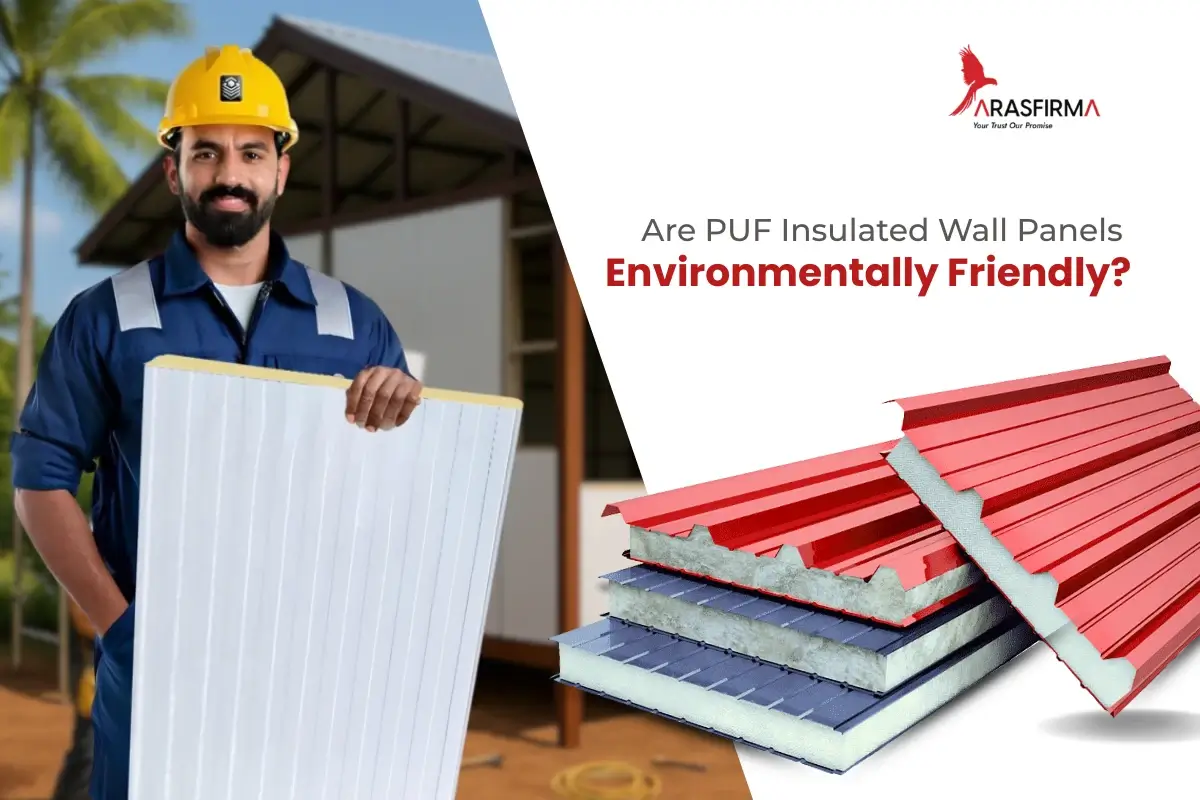
PUF (polyurethane foam) insulated wall panels are sandwich panels: a polyurethane core trapped between two metal sheets (usually galvanized steel, aluminum, or stainless steel). They’re popular because they offer:
- Strong thermal insulation that cuts heat transfer.
- Lightweight construction for easier handling and installation.
- Good durability and structural performance for many building types.
You’ll see them in cold storage, industrial sheds, clean rooms — and increasingly in energy-conscious buildings because they help reduce HVAC loads and steady indoor temperatures.
Environmental impact across the lifecycle
Every material has a footprint. PUF panels are no exception: raw materials, manufacturing energy, use-phase benefits, and end-of-life handling all matter. Break it down like this:
Raw materials & production emissions
PUF foam is largely petroleum-derived, so it starts with fossil fuels — that’s a downside. At the same time, the metal facings are recyclable and manufacturers are starting to shift to:
- Low-GWP blowing agents for foam expansion.
- Recycled or responsibly sourced metal facings.
- Blends that include bio-based polyols to reduce fossil inputs.
So while the baseline isn’t perfect, the sector is evolving and manufacturers are making tangible improvements.
Energy used in manufacturing
Making panels takes energy: foam expansion, metal forming, lamination. Historically that meant high emissions, but modern plants are cutting energy use by:
- Recovering process heat.
- Using renewable power where possible.
- Running more efficient, closed-loop processes to cut waste.
Those changes reduce manufacturing emissions, though energy use is still a real factor to consider.
End-of-life and recyclability
This is the trickiest part. Polyurethane foam doesn’t biodegrade, so panels have often ended up in landfills. That said:
- Metal facings are fully recyclable.
- Chemical recycling for PU is progressing and some take-back programs exist.
Recycling PUF foam at scale is still complex, but progress is being made — it’s not a solved problem yet, but it’s getting better.
PUF panels and green building standards (LEED, BREEAM)
PUF panels can help buildings earn green credits. They improve operational energy performance, support off-site modular construction (which can cut site waste), and—when specified correctly—can contribute to better indoor environmental quality. In short, they’re useful for certification pathways when paired with low-emission materials and good design.
How manufacturers are improving sustainability
Leading makers aren’t waiting. Common changes include:
- Switching to zero-ODP and low-GWP blowing agents.
- Recycling production scrap and reusing metal waste.
- Adding bio-based content to foam formulations.
- Optimizing designs to use less material while improving lifespan.
These moves aren’t just PR — they actually reduce lifecycle impacts.
Where PUF panels make sense in sustainable construction
PUF panels are especially valuable where thermal control is mission-critical:
- Green buildings focused on energy performance.
- Cold chains, food processing and labs that need tight temperature control.
- Modular/prefab projects that cut on-site waste.
Their high thermal efficiency and light weight make them a strong choice when operational energy savings are a priority.
PUF vs EPS: which is greener?
Short answer: it depends.
- Insulation performance: PUF outperforms EPS (lower U-values), so it saves more energy over a building’s life.
- Raw materials: both are petroleum-based, though production methods differ.
- Recyclability: EPS is easier to mechanically recycle today; PUF recycling is more complex but improving.
If long-term energy savings are your priority, PUF often wins. If end-of-life simplicity matters most, EPS has the edge.
PUF vs Rockwool and PIR panels
Each material brings trade-offs:
- PUF — excellent insulation and light weight; recycling is improving but still harder.
- PIR — slightly better thermal performance and improved fire resistance; similar petrochemical origins.
- Rockwool — made from volcanic rock, non-combustible and highly recyclable, but heavier and with lower insulation per thickness.
Choose based on what you value most: insulation efficiency (PUF/PIR), fire performance (PIR/Rockwool), or recyclability and non-combustibility (Rockwool).
Conclusion
PUF insulated wall panels aren’t perfect, and they do start from fossil-based chemistry — that’s honest and important to acknowledge. But the picture isn’t all negative. Improved blowing agents, bio-based polyols, energy-efficient manufacturing, and evolving recycling technologies are steadily improving the sustainability profile of PUF panels. In many projects, the lifetime energy savings from superior insulation can offset the higher initial environmental cost. So: PUF panels are not a zero-impact solution, but used thoughtfully—and specified with greener manufacturing choices and end-of-life planning—they’re a pragmatic, effective tool for lowering operational energy and moving buildings toward better sustainability.