
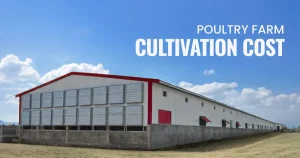
Poultry Farming is one of the fastest-growing agribusiness opportunities in India. With increasing demand for chicken meat and eggs, poultry farming offers strong income potential for both small farmers and commercial investors.
However, success depends on understanding the cost structure clearly, not just the investment, but also the recurring expenses and long-term savings.
In this guide, we explain the true costs of poultry farming in India, supported by practical figures and expert insights. We also highlight why modern infrastructure, such as PUF panels, plays a crucial role in improving profitability and sustainability.
Understanding the Initial Investment for Poultry Farming
The initial investment forms the backbone of your poultry business. It includes land, construction, equipment, and utilities. Costs vary depending on scale, but having realistic estimates helps avoid financial stress later.
Land and Location Costs
Land prices in India vary significantly by state and proximity to towns. For a 1,000–2,000-bird poultry farm, you typically need around 5,000–8,000 sq. ft. Many new farmers prefer leasing land to reduce upfront capital. Choosing the right location reduces long-term costs.
Look for areas with good road connectivity, reliable water supply, and electricity access. Being too far from markets increases transport costs, while being too close to residential areas may violate local biosecurity norms.
- Rural agricultural land: ₹3 lakh to ₹15 lakh per acre
- Leasing option: ₹15,000 to ₹40,000 per acre per year
Poultry Shed Construction and Infrastructure
Shed construction is one of the biggest expenses in poultry farming. While traditional sheds appear affordable, they often require additional cooling systems during Indian summers. It increases electricity bills and maintenance costs.
Traditional brick shed cost:
- ₹350–₹600 per sq. ft.
PUF panel shed cost (recommended):
- ₹800–₹1,200 per sq. ft.
In India’s extreme heat, temperature control directly affects bird growth and feed efficiency. Investing in insulated sheds improves weight gain and reduces mortality, thereby improving overall farm economics. Though the upfront cost is higher, PUF panels are best suited for the Poultry Farming in India because they provide:
- Excellent thermal insulation
- 30–40% lower cooling costs
- Stable internal temperature
- Reduced heat stress
- Longer structural lifespan (15–25 years)
Equipment and Utilities Setup
Every poultry farm needs basic operational equipment. For a 1,000-bird farm, approximate costs include:
- Equipment (Feeders, Drinkers, Brooder): ₹20,000 – ₹40,000
- Utilities (Electric, Water, Curtains): ₹50,000 – ₹80,000
- Misc./Installation (Litter, Tools): ₹10,000 – ₹20,000
Recurring Operational Costs in Poultry Farming
After setting up, operational costs determine your profitability. These expenses repeat every cycle.
Cost of Chicks
The price of day-old chicks fluctuates depending on breed and market conditions. For 1,000 broilers, the investment per cycle ranges between ₹30,000 and ₹50,000. For 5,000 birds, this increases to ₹1.5 lakh–₹2.5 lakh. Choosing quality chicks from reliable hatcheries ensures a better growth rate and lower mortality, which directly impacts revenue.
- Broiler chicks: ₹30–₹50 per chick
- Layer chicks: ₹35–₹60 per chick
Feed Expenses
Feed is the largest expense in poultry farming, accounting for 60–70% of total operating costs. A broiler consumes around 3.5–4 kg of feed over a 35–40-day cycle. Proper feed management and temperature control improve the feed conversion ratio. Insulated PUF panel sheds maintain optimal temperature, ensuring birds eat properly and grow efficiently even during peak summer. With feed prices between ₹28–₹35 per kg:
- For 1,000 birds: ₹98,000–₹1.4 lakh per cycle
- For 5,000 birds: ₹4.9 lakh–₹7 lakh per cycle
Labour and Veterinary Costs
Labour cost depends on farm size and automation. Vaccination and medicines cost around ₹5–₹10 per bird per cycle. For 1,000 birds, that means ₹5,000–₹10,000. Maintaining hygiene through modern construction reduces disease outbreaks and medicine expenses significantly.
- One worker salary: ₹10,000–₹15,000 per month
- Medium farms (2–3 workers): ₹25,000–₹45,000 per month
Electricity and Utility Costs
Sheds built using PUF panels reduce cooling load, leading to significant electricity savings over time. Water expenses may range from ₹2,000 to ₹5,000 per month, depending on the source and usage. Electricity bills increase during hot months.
- Small farm: ₹8,000–₹20,000 per month
- Medium farm: ₹20,000–₹50,000 per month
Government Support and Financing Options
The Indian government actively supports poultry farming under livestock development schemes. Preparing a detailed project report with a cost breakdown and modern infrastructure planning increases the chances of loan approval.
- Subsidy support: 25–35% of project cost (varies by state)
- Bank loans are available under agricultural finance schemes
- NABARD assistance for rural poultry ventures
Profitability and Return on Investment
Broilers are ready for market in 35–45 days. Average life weight is 2 – 2.5 kg. With market prices around ₹100–₹130 per kg. After deducting feed, chick cost, and operational expenses, net profit margins typically range between 10% to 30%, depending on market rates and mortality levels.
Proper temperature management through insulated sheds improves weight consistency and reduces bird loss. Even a 3–5% reduction in mortality can significantly increase annual profit.
Why Modern Infrastructure Reduces Long-Term Cost?
Many farmers focus only on the initial construction cost. However, poultry farming should be viewed as a long-term business. Although traditional sheds may save ₹3 to ₹5 lakh initially, higher cooling costs and performance losses can reduce long-term profitability. That is why PUF panels are best for poultry farming in India, especially under extreme climatic conditions.
PUF panel sheds offer:
- Lower electricity expenses
- Reduced maintenance
- Improved bird health
- Stable production across seasons
- Better biosecurity
How To Start Poultry Farm
Starting a poultry farm in India can be a profitable agribusiness with proper planning and management. From choosing between broiler or layer farming to selecting healthy birds, the right location, and well-designed housing, each step plays a key role in success. With growing demand for eggs and chicken, poultry farming offers a stable income opportunity for both small farmers and large entrepreneurs.
Conclusion
Poultry farming cost in India depends on scale, location, infrastructure, and operational efficiency. Recurring costs such as chicks, feed, labour, and electricity determine ongoing profitability. Among these, feed and climate control play the most important roles.
By investing in quality infrastructure, such as PUF panel sheds, farmers can reduce energy consumption, improve bird performance, and achieve consistent profits throughout the year.
With rising protein demand and government support, poultry farming remains a strong and sustainable agribusiness opportunity in India, provided it is planned wisely and managed scientifically.