PUF Panels vs. Traditional Insulation Materials
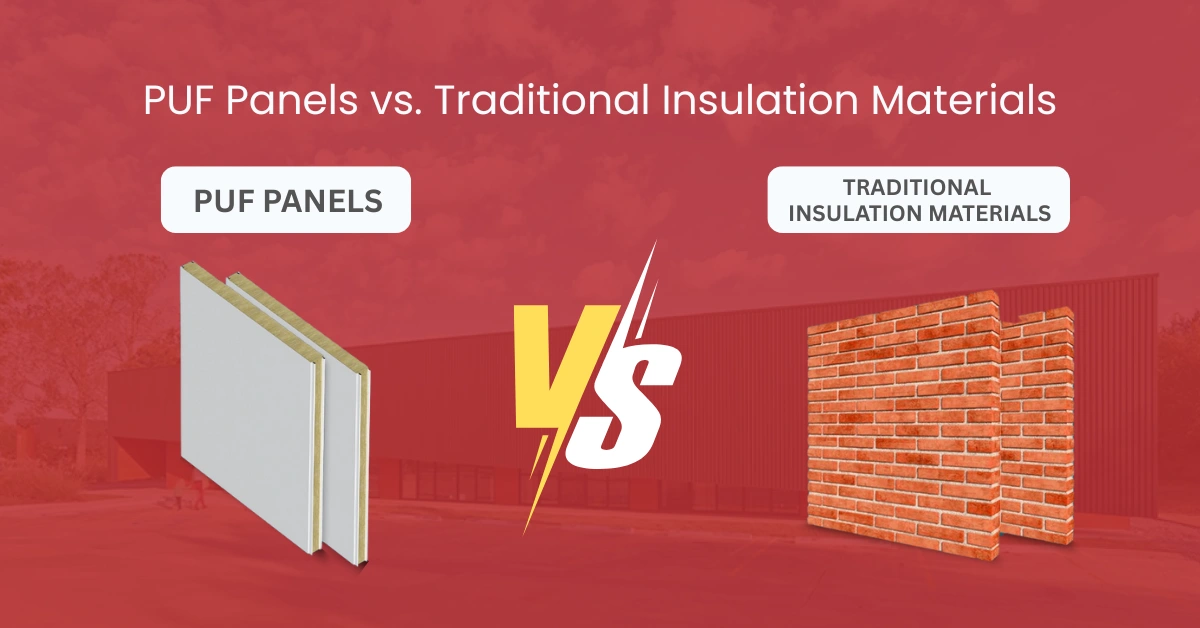
Insulation plays a major role in the performance of any building in India. It affects energy use, temperature stability, comfort, lifespan, and even safety.
Today, most projects compare two main options: PUF (Polyurethane Foam) panels and traditional insulation materials like glass wool, rock wool, and EPS. Each has strengths and limits, but they perform very differently in real conditions.
This blog offers a clear comparison to help you choose the proper insulation for your building. The sections below explain how each material works and how it performs in areas like heat resistance, strength, cost, and environmental impact.
Understanding PUF Panels and Traditional Insulation Materials
PUF panels are factory-made sandwich panels. They have a rigid polyurethane foam core placed between two metal sheets. It creates a strong, insulated panel that serves as both a structural element and a thermal barrier. These panels are common in cold rooms, industrial buildings, prefabricated homes, and roofing systems.
Traditional insulation materials have been used for many years. They include glass wool, rock wool, EPS (thermocol), and similar fibre or foam-based products. These materials only provide insulation. They need extra framing or cladding for protection.
Their performance often depends on how well they are installed and maintained.
PUF panels combine insulation and strength in one element. Traditional materials offer insulation alone.
1. Thermal Performance
Thermal performance shows how well a material prevents heat transfer. It tells us how much warm air stays out and how much cool air stays in. Good insulation lowers energy use and keeps indoor spaces comfortable.
PUF Panels
PUF panels provide excellent thermal insulation due to their low thermal conductivity. Their conductivity usually ranges between 0.020 and 0.024 W/mK, which is lower than most alternatives. It means they resist heat transfer more effectively.
Their high R-value helps keep buildings cool during hot Indian summers and warm during winter. The foam has a closed-cell structure. It blocks air movement inside the panel. This structure provides strong thermal protection in extreme temperatures, including high heat or icy room conditions.
Because of this, PUF panels are preferred in cold storage, food processing units, and temperature-sensitive industrial spaces.
Traditional Insulation Materials
Traditional insulation materials have a higher thermal conductivity than PUF panels. Their performance depends on installation, thickness, and exposure to moisture.
Glass wool and rock wool can offer good insulation, but may lose effectiveness when they absorb humidity. EPS sheets insulate well but do not perform as consistently when exposed to temperature changes.
Many traditional materials sag or shift over time. It creates gaps that allow heat leakage. As a result, they do not maintain stable insulation for long periods.
Winner: PUF Panels – Due to their low thermal conductivity and high efficiency in temperature regulation.
PUF panels keep internal temperatures more stable. They also perform better during extreme weather. Their consistency, closed-cell foam structure, and high R-value make them superior in thermal performance.
2. Energy Efficiency and Cost Savings
Energy efficiency is important for both households and industries. Better insulation reduces energy use and lowers monthly bills.
PUF Panels
PUF panels help cut energy loss by creating a tight thermal barrier. They reduce cooling or refrigeration loads. They keep the temperature stable even when outdoor weather changes quickly. Because of this, air-conditioning systems work less. Cold rooms also consume less power to maintain low temperatures.
With lower energy consumption, building owners save money every month. Over time, these savings often recover the initial investment cost. PUF panels continue to perform well for many years, so energy savings remain consistent.
Traditional Insulation Materials
Traditional materials do not retain their insulation levels as long. They tend to create thermal leaks, especially after they age or absorb moisture. It leads to higher energy use. Cooling systems must work harder to maintain the required temperature. The result is higher operational costs and more strain on HVAC or refrigeration units.
Winner: PUF Panels – They provide greater energy savings over the lifespan of a building.
PUF panels reduce energy use over many years. Their long-term performance gives them a strong lifetime cost advantage. It makes them a more sustainable choice for buildings focused on efficiency.
3. Installation and Structural Strength
Good insulation must also be easy to install and strong enough to support the building design.
PUF Panels
PUF panels offer fast and simple installation. They are lightweight and come in ready-made modular forms. Workers can install them quickly using basic tools. Their tongue-and-groove joints ensure a tight and secure fit. It helps maintain airtight performance.
PUF panels also add strength to the building envelope. The metal sheets on both sides make the panels rigid. It reduces the need for extra structure. They perform well in both walls and roofing systems. They also speed up project timelines, which helps reduce labour costs.
Traditional Insulation Materials
Traditional insulation takes more time to install. It needs several steps. Workers must set up framing, place insulation, add vapour barriers, and install outer cladding. Each step needs additional labour. Mistakes during installation reduce insulation quality.
Traditional materials do not add structural strength. They only fill the spaces between frames. They need extra support layers, which increases overall project complexity.
Winner: PUF Panels – They offer quicker, easier installation and added structural integrity.
PUF panels make construction faster, reduce labour, and increase strength. It makes them practical for projects with tight deadlines or high structural demands.
4. Durability and Longevity
Long-lasting insulation reduces repair needs and prevents energy loss over time.
PUF Panels
PUF panels are built for durability. Their metal surface protects the foam core from weather, moisture, and pests. The closed-cell core does not absorb water. It prevents mould, corrosion, or decay.
PUF panels resist wear and harsh outdoor conditions. They need little maintenance compared to fibre-based insulation. Their strength and resistance give them a long service life, making them ideal for industrial or commercial buildings.
Traditional Insulation Materials
Traditional insulation materials face more problems with ageing. Glass wool can sag. Rock wool may shift over time. EPS sheets can crack or crumble. Many of these materials absorb moisture. When this happens, their insulation performance drops. They may need replacement much sooner than PUF panels.
Winner: PUF Panels – They have better resistance to environmental factors and a longer lifespan.
Their long life and stable performance make PUF panels a reliable choice for long-term insulation.
5. Fire Resistance and Safety
Safety standards require insulation materials to limit flame spread and reduce fire risk.
PUF Panels
PUF panels come in fire-retardant variants. These panels meet many building codes and industry standards. Fire-retardant grades slow flame spread and reduce smoke release. When installed correctly, they help maintain safety in buildings.
Traditional Insulation Materials
Fire performance differs across traditional materials. Rock wool is naturally fire-resistant. Glass wool offers moderate resistance. EPS and thermocol burn more easily unless treated. Because of these differences, fire safety depends strongly on the material selected and where it is used.
Winner: Tie – Fire resistance depends on the specific variant used for both PUF and traditional insulation.
Both PUF panels and traditional materials can meet safety standards if the right grade is chosen.
6. Environmental Impact
Environmental performance matters for modern green building standards.
PUF Panels
PUF panels support eco-friendly construction. They reduce long-term carbon emissions by lowering energy use. Many manufacturers use recyclable metal for the outer layers. Modern production methods also minimise waste. Because PUF panels last many years, they reduce replacement frequency and material waste.
Traditional Insulation Materials
Traditional materials have a higher environmental impact during production. Many are not fully recyclable. Some break down into small fibres that add to waste. They also need frequent replacement, which increases their long-term footprint.
Winner: PUF Panels – Eco-friendly manufacturing processes offer better long-term sustainability.
PUF panels contribute to lower carbon emissions and better compliance with green building norms.
7. Cost-Effectiveness
Cost-effectiveness includes initial price, maintenance needs, and lifetime value.
PUF Panels
PUF panels cost more at the beginning. But their energy savings, low maintenance needs, and long lifespan make them cost efficient in the long run. Their durability also reduces repair or replacement costs. The lifetime ROI is much higher.
Traditional Insulation Materials
Traditional materials are cheaper to buy. But they need frequent repairs or replacement. They also cause higher energy use due to thermal leaks. Over many years, they have become more expensive than PUF panels.
Winner: PUF Panels – They provide better value over time despite a higher initial investment.
PUF panels deliver a strong return on investment through energy savings and long service life.
PUF Sandwich Panel vs. Traditional Roofing
Let’s just drive into the short difference between PUF vs. Traditional roofing.
Traditional roofing uses metal sheets and separate insulation. This system has more joints and gaps. It needs more labour and can lose heat easily. It also creates noise during rain or wind.
PUF sandwich roofing panels combine insulation and roofing in one product. They provide better heat resistance, improved strength, and faster installation. They reduce noise and energy use. It makes them a preferred choice for warehouses, factories, cold rooms, and modern homes.
Conclusion
PUF panels outperform traditional insulation materials in almost every major category. They offer stronger thermal performance, better energy savings, easier installation, superior durability, and greater long-term value.
Traditional materials still have a place in some projects, but PUF panels deliver consistent results and long-term reliability. For modern Indian construction, PUF panels provide a smart, strong, and sustainable solution.