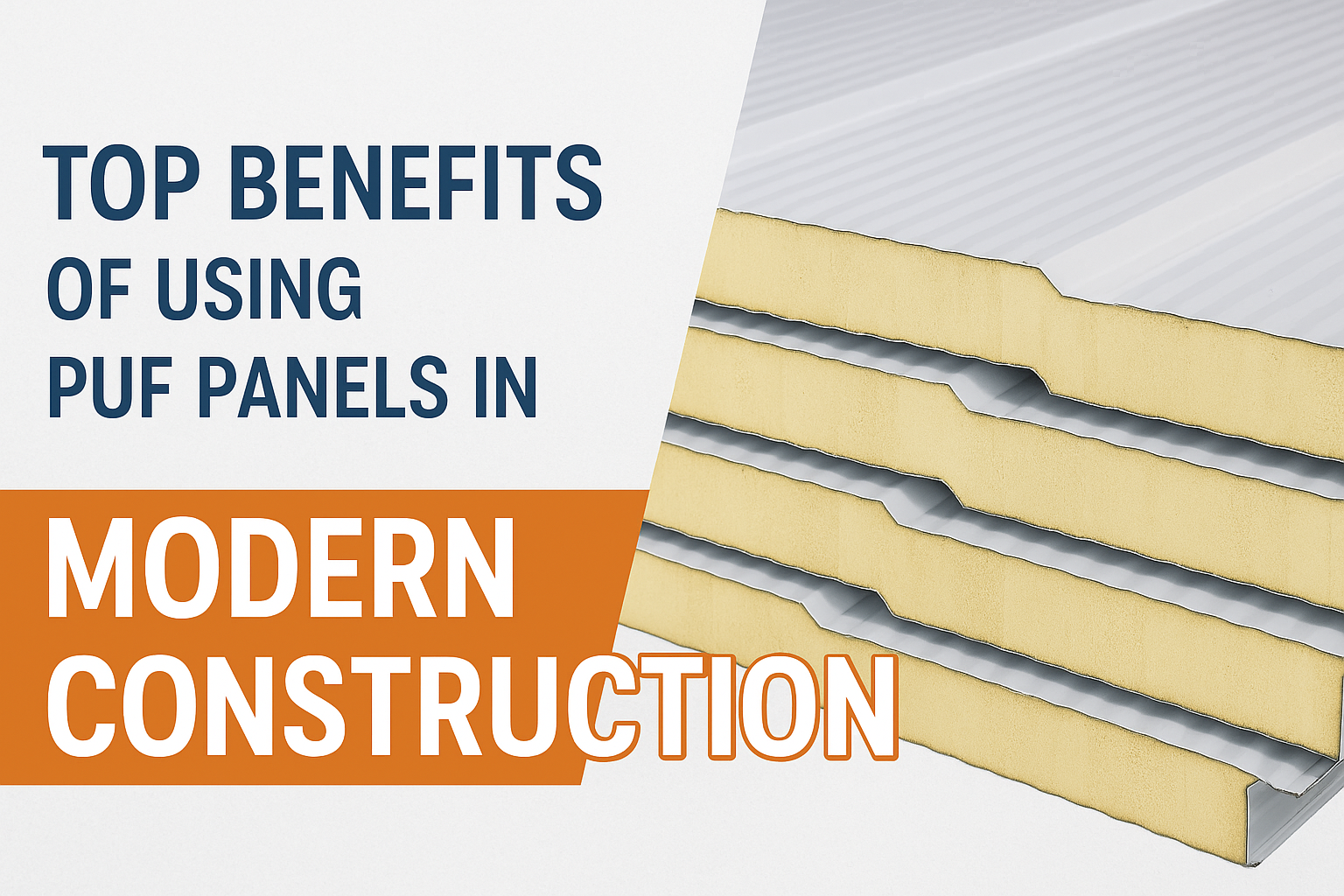
Building a home today is not just about bricks, cement, and traditional construction methods. With rising material costs, unpredictable weather, and the growing need for quicker project completion, more homeowners and developers are turning towards PUF (Polyurethane Foam) panels.
These pre-engineered panels offer exceptional insulation, impressive strength, and unmatched construction speed, making them an ideal choice for modern houses. Whether you’re looking to build a compact home, a farmhouse, or an energy-efficient villa, PUF panels offer a cost-effective, durable solution.
In this detailed guide, we walk you through every step involved in building a modern PUF panel house from planning and design to installation, utilities, and final inspection, making it easier for you to visualise and execute your dream home.
Step 1: Planning Your PUF Panel House
Before a single panel is installed, precise planning is essential. Good project planning ensures that your PUF panel home is structurally sound, meets your lifestyle needs, and fits your budget.
Start by defining the purpose and scale of your home. Are you constructing a small residential unit, a two-storey modern home, or a farmhouse extension? Your project type determines panel specifications, load capacities, and cost.
Next comes budget planning. One major advantage of PUF panels is that they significantly reduce construction time, thereby lowering labour costs. Factor in the cost of panels, land preparation, foundation, structural framing, roofing, utilities, and interior work.
At this stage, it’s crucial to consult with an engineer or architect experienced in PUF panel systems. They help you evaluate soil conditions, your region’s climate, and structural requirements, such as load-bearing capacity. An engineer familiar with PUF design will also guide you on panel thickness, installation angles, and building code compliance.
Finally, prepare your layout and floor plan. Decide on room placements, windows, ventilation points, and interior pathways. Since PUF homes are modular, precise layout planning ensures panels fit seamlessly during installation.
Step 2: Design and Architecture Planning
Once the initial planning is complete, move on to the architectural design. While PUF panel houses follow a modular system, they still allow for creative and modern architectural choices.
Your architect will start by drafting elevations, cross-sections, and detailed layouts. This includes placement of doors, windows, and structural beams. PUF panels are versatile and can be customised for various architectural styles, minimalist, contemporary, or traditional.
Pay attention to natural light and ventilation. Design roof slopes, skylights, and large openings accordingly. Since PUF panels offer superior insulation, incorporating large glass surfaces or wide openings becomes easier without worrying about heat transfer.
Keep in mind that PUF panel houses must be designed with load distribution in mind. The architect works closely with the structural engineer to ensure the building remains stable and safe, especially in regions with heavy rainfall, heat waves, or coastal winds.
Step 3: Choosing the Right PUF Panels
Selecting the right PUF panels is a critical decision that influences your home’s efficiency, comfort, and lifespan.
PUF panels are available in various thicknesses, including 40 mm, 50 mm, 80 mm, and up to 150 mm. For homes in hot climates, thicker panels provide better insulation and reduce cooling costs. Roof panels generally require more thickness than wall panels.
Depending on your region’s climate, opt for panels with the appropriate R-value (thermal resistance). Higher R-value panels help maintain indoor temperatures comfortably.
Another factor is compliance with local building codes. In some regions, fire-resistant or certified structural panels may be mandatory. Also consider panel surface types: plain, ribbed, coated, or specially textured, based on the look you desire.
Choose panels from a reliable manufacturer that provides quality assurance, warranty, and proper testing certifications.
Step 4: Preparing the Site
Before installation begins, the construction site must be properly prepared. This step sets the foundation literally for the entire structure.
First, the land must be levelled and cleared. Remove debris, vegetation, and loose soil. Proper levelling eliminates installation issues later.
Next, construct the foundation. Depending on the soil type and your home’s design, this may be a traditional RCC foundation, steel piles, or a raised plinth. Although PUF panel houses are lighter than conventional buildings, the foundation must still be strong and stable.
Precise alignment markers are drawn to indicate where walls and panels will be placed. This helps avoid misalignment during installation and ensures that the structure remains perfectly square and stable.
Step 5: Structural Framing
A sturdy framework forms the skeleton of your PUF panel home. This frame can be made of steel, concrete, or a hybrid combination based on architectural requirements.
Steel framing is popular for its strength, stability, and fast installation. The frame supports the PUF panels and distributes the load evenly across the foundation.
During this stage, focus on:
- Ensuring vertical and horizontal alignment
- Proper spacing of columns and beams
- Adequate reinforcement for door and window openings
The framing stage determines the durability and longevity of your PUF panel home. A well-designed frame ensures the panels interlock smoothly and stay secure against strong winds, temperature changes, and structural load.
Step 6: Installing the PUF Panels
This is where your home truly begins to take shape. PUF panel installation is quick, clean, and efficient compared to conventional construction.
The panels are transported to the site and positioned according to the architectural plan. Installers begin by fixing the wall panels onto the foundation and structural frame.
Each panel is interlocked using male-female joints, sealants, and specialised fasteners. Adhesives may also be used to enhance stability and insulation. Precision alignment is extremely important, as even minor gaps can reduce thermal efficiency.
Once the wall panels are in place, roof panels are installed using a similar technique. Proper sealing at every joint ensures airtightness and prevents moisture entry.
Compared to brick-and-mortar construction, PUF panel installation is significantly faster, allowing you to complete the structure within days rather than months.
Step 7: Roofing and Finishing
After the main structure is complete, the next step is roofing and exterior finishing.
Roof panels are fixed firmly, ensuring proper slope and drainage. Installers pay attention to joint sealing, as this helps prevent leaks and improves weather resistance. These finishes enhance both aesthetics and protection, helping your PUF panel home withstand harsh weather conditions.
Exterior finishing options include:
- Textured coatings
- Cladding panels
- Paint
- Cement boards
- Decorative finishes
Step 8: Utilities and Interior Setup
Once the structure and roofing are complete, it’s time to install electrical, plumbing, and interior partitions.
Electrical conduits can be embedded in pre-cut panel spaces or installed along channels designed by the engineer. Plumbing lines are laid out with careful planning to prevent leaks or cracks.
Interior walls can be made of gypsum boards, PVC panels, or lightweight partitions, depending on the design. Flooring may include vitrified tiles, laminate, or wooden flooring based on your preference.
Thanks to PUF’s insulation properties, your indoor environment stays cooler in summer and warmer in winter, making the house more energy-efficient and comfortable.
Step 9: Final Touches and Inspection
In the last stage, all systems are tested to ensure perfect functionality. Electrical fixtures, switches, outlets, plumbing fixtures, and HVAC systems are thoroughly checked.
Final touches include painting, carpentry, cabinetry, and installing lighting. Before handing over the home, a comprehensive inspection is conducted to verify structural stability, sealed joints, panel alignment, and safety compliance.
This step ensures your PUF panel house is ready for safe and comfortable living.
Benefits of Building a PUF Panel House
Building a home with PUF panels offers several practical advantages, making the construction process smoother and the final structure more efficient. One of the most significant benefits of building a PUF panel house is its excellent insulation.
The panels help maintain a comfortable indoor temperature, lowering energy consumption throughout the year. PUF panel homes are also known for their fast installation, which significantly reduces labour time and overall project costs.
Conclusion
Building a modern home with PUF panels is one of the smartest choices for today’s homeowners. Whether you prioritise speed, energy efficiency, durability, or cost savings, PUF panels tick all the right boxes.
By following the step-by-step approach outlined above, planning, designing, selecting the right panels, preparing the site, framing, installing, finishing, and inspecting, you can create a beautiful and long-lasting home that meets global construction standards.
From small houses to large villas, PUF panel construction offers incredible flexibility and performance. As India moves towards smarter and more sustainable building methods, PUF panel homes are proving to be the future of modern housing.
If you need support selecting PUF panels or planning your next construction project, we can guide you with expertise and dependable products.