Mistakes to Avoid When Installing PUF or UPVC Roofing Panels
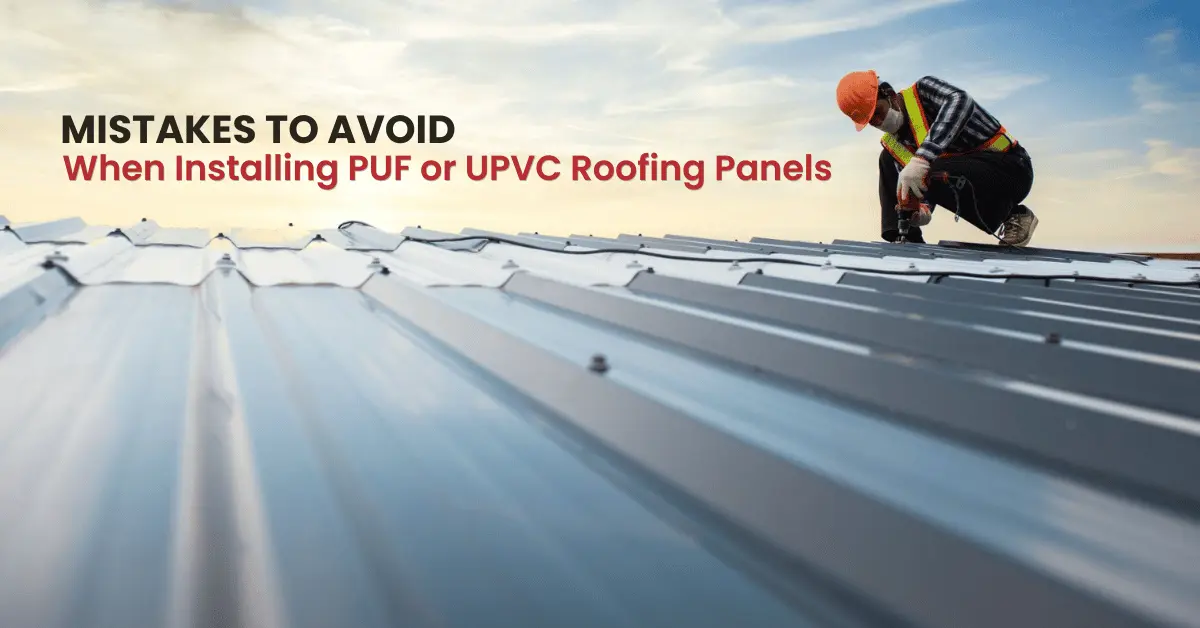
Roofing plays a crucial role in protecting industrial, commercial, and residential buildings from harsh weather conditions. Among modern roofing solutions, PUF Roofing Panels and UPVC roofing sheets have become popular due to their durability, insulation properties, and long service life.
These panels are widely used in warehouses, factories, poultry farms, cold storage units, and prefabricated buildings across India because they offer excellent thermal insulation and low maintenance.
However, even the best-quality panels can fail if they are not installed correctly. Many roofing problems, such as leakage, panel damage, reduced insulation performance, and structural weakness, occur due to common installation mistakes. Proper planning, correct handling, and following manufacturer instructions are essential to ensure long-lasting performance.
In this blog, we will discuss the most common mistakes to avoid when installing roofing panels and how proper installation of PUF Roofing Panels can improve durability, energy efficiency, and overall roof performance.
Ignoring the Manufacturer’s Guidelines
One of the biggest mistakes during roofing installation is ignoring the instructions provided by the manufacturer. Many installers assume that all roofing sheets are installed the same way, but this is not true. Different brands of PUF Roofing Panels come with specific guidelines for fixing, sealing, spacing, and support structure.
PUF Panel Installation Mistakes
Mistake:
Installers often skip the installation manual and use general methods based on previous experience. This can lead to wrong support spacing, incorrect slope, or the use of unsuitable fasteners. In some cases, sealants recommended by the manufacturer are not used, which increases the chances of leakage.
Right Way to Do It:
Always follow the installation guide provided with the panels. Check the recommended support distance, fastener type, slope angle, and sealing method before starting the work. Proper installation of PUF Roofing Panels according to the manufacturer's instructions ensures better insulation, strong fixing, and longer life.
Improper Handling and Storage of Panels
Roofing panels are durable after installation, but they can get damaged easily before fixing if they are not handled properly. Many roofing problems start from poor storage and careless handling of PUF Roofing Panels.
Mistake:
Panels are often stored directly on uneven ground or left uncovered in open areas. Sometimes workers drag the panels while moving them, which scratches the coating. Stacking too many panels together can also bend the lower sheets and affect their shape.
Right Way to Do It:
Panels should always be stored on a flat and dry surface with proper support. They must be covered to protect them from rain and sunlight. While lifting, panels should be carried carefully instead of being dragged. Proper handling keeps the coating safe and ensures that PUF Roofing Panels fit correctly during installation.
Incorrect Fastening Techniques
Fastening is one of the most important parts of roofing installation. Even high-quality panels can fail if the screws and fixing methods are not correct.
Mistake:
A common mistake is using ordinary screws instead of roofing fasteners. Some installers tighten the screws too much, which damages the panel surface, while others leave them loose, causing movement during strong winds. Incorrect spacing between fasteners can also lead to bending or vibration.
Right Way to Do It:
Always use recommended self-drilling screws with sealing washers while installing PUF Roofing Panels. Screws should be tightened properly without damaging the panel. Fasteners must be placed at the correct positions and spacing as suggested by the manufacturer. Proper fastening keeps the roof secure, leak-proof, and long-lasting.
Neglecting Thermal Expansion and Contraction
Roofing panels expand in hot weather and contract in cold weather. If this natural movement is not considered during installation, the roof may develop cracks, gaps, or loose screws.
Mistake:
Many installers fix panels tightly without leaving space for expansion. In large roofs, expansion joints are often ignored. This creates stress on the panels, which may cause bending, noise, or leakage after some time.
Right Way to Do It:
While installing PUF Roofing Panels, a proper gap allowance should be given for expansion and contraction. Flexible washers and correctly sized screw holes should be used to allow movement. For large buildings, expansion joints should be planned. This helps the roof stay stable in all weather conditions.
Poor Overlapping and Sealing
Proper overlapping and sealing are necessary to make the roof waterproof. Most leakage problems happen because panels are not overlapped or sealed correctly.
Mistake:
Sometimes installers reduce the overlap to save material or time. Low-quality sealants are also used in some cases. Panels may not be aligned properly, which creates gaps that allow water to enter during rain.
Right Way to Do It:
Each panel should be overlapped exactly as recommended by the manufacturer. High-quality sealant must be applied to side laps and end laps. The surface should be clean before sealing so that the sealant sticks properly. Correct overlapping ensures that PUF Roofing Panels provide strong insulation and complete protection from water.
Conclusion
Installing roofing panels may look simple, but small mistakes can lead to major problems later. Ignoring manufacturer instructions, improper handling, wrong fastening, poor sealing, and not allowing thermal expansion are some of the most common errors seen during installation.
The right way is to follow proper methods, use recommended materials, and work with experienced installers. When installed correctly, PUF Roofing Panels offer excellent insulation, durability, and long service life. Careful installation not only prevents leakage and damage but also reduces maintenance costs and improves energy efficiency.
For industrial sheds, warehouses, poultry farms, and commercial buildings, choosing the right installation method is as important as choosing the right panel. Following the correct practices ensures that PUF Roofing Panels perform efficiently for many years.