Best Practices for Handling and Installing PUF Panels
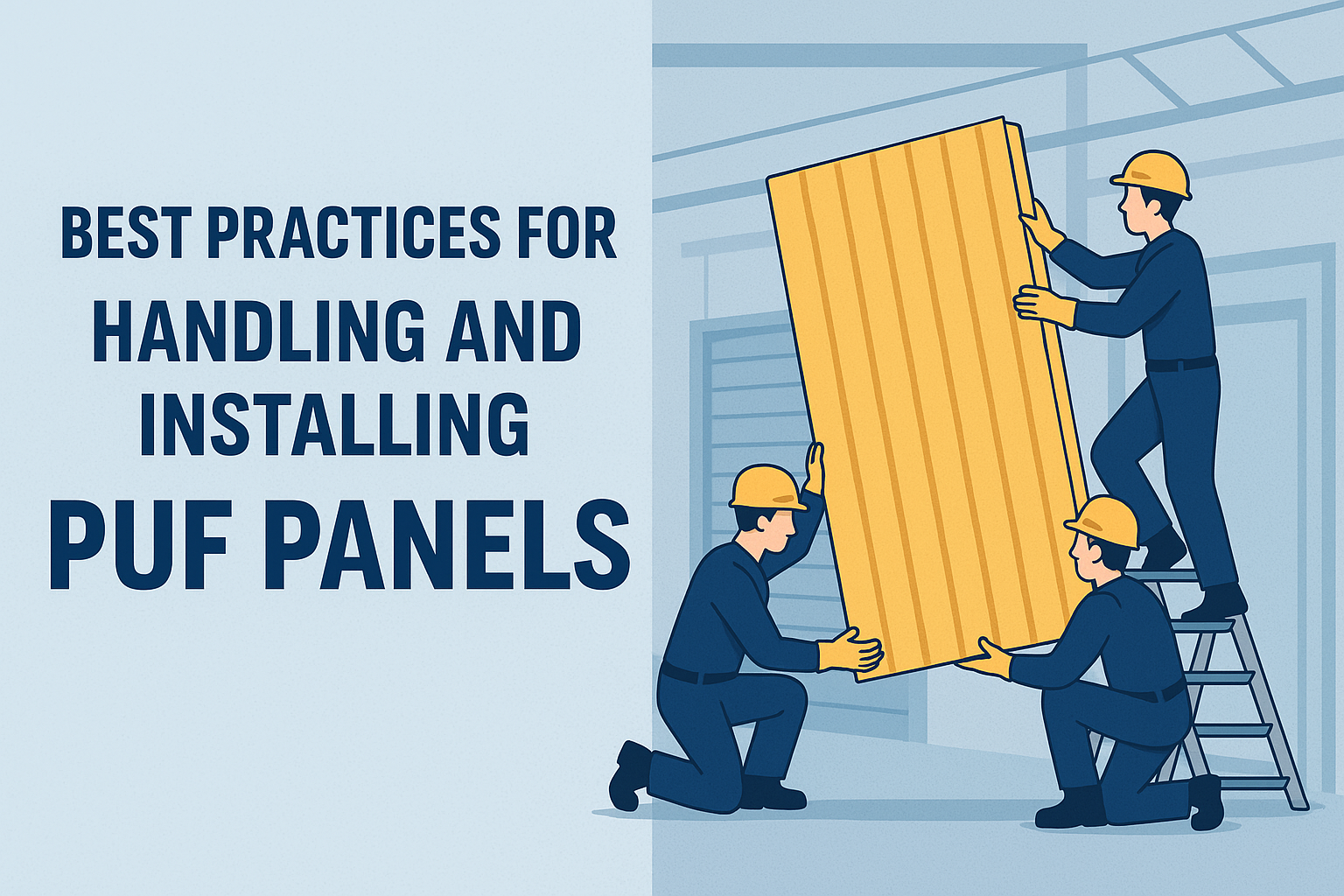
PUF Panels (Polyurethane Foam Sandwich Panels) are widely used in roofing, wall cladding, cold storage, and prefabricated buildings because of their strength, insulation, and quick installation. However, their performance depends heavily on how they are handled, stored, transported, and installed at the site. Improper handling can damage the panels, reduce insulation efficiency, and shorten their lifespan.
Safe Handling of PUF Panels
- Always lift panels carefully; never drag them across rough surfaces to avoid scratches and dents.
- Use suction lifters, nylon slings, or manual handling with at least two people for longer panels.
- Protect edges and corners with edge guards to prevent cracks in the insulation core.
- Avoid contact with sharp tools that may puncture or damage the surface sheets.
Storage Recommendations
- Store panels on a flat, level surface with wooden pallets or spacers underneath.
- Keep stacks limited in height (usually not more than 1.5 meters) to prevent bending or warping.
- Cover panels with a protective sheet to shield them from direct sunlight, rain, or dust.
- Ensure proper ventilation around stored panels to avoid moisture buildup.
- Avoid storing near open flames or high-heat sources, as polyurethane foam is sensitive to high temperatures.
Transportation Guidelines
- Use covered trucks or trailers to protect panels during transit.
- Place soft padding between panels during transport to avoid scratches.
- Secure the load with straps, but avoid over-tightening, as this can cause dents.
- Always unload panels with care, preferably using mechanical lifters or forklifts with protective padding.
Installation Best Practices
- Ensure the base structure is properly aligned before fixing panels.
- Use only recommended fasteners, sealing tapes, and silicone sealants to maintain airtight joints.
- For roofing, install panels with a minimum slope to allow proper drainage.
- Never step directly on PUF roofing panels; place wooden walk boards to distribute weight.
- Check joints carefully to avoid thermal bridging (heat leakage through gaps).
- Seal joints tightly to improve both thermal insulation and waterproofing performance.
Common Mistakes to Avoid
- Dragging panels during unloading → causes scratches.
- Storing on uneven ground → leads to bending.
- Using incorrect fasteners → weakens structural integrity.
- Leaving gaps between joints → reduces insulation efficiency.
- Exposing panels to direct fire/heat → damages insulation core.
Why Proper Handling Matters
Correct handling ensures that:
- PUF roofing panels maintain weather resistance.
- PUF wall panels retain thermal insulation and structural strength.
- Cold storage panels perform effectively in extreme temperature ranges.
- Projects last longer with reduced maintenance costs.
Conclusion
Handling PUF panels with care is as important as choosing the right supplier. By following these best practices in handling, storage, transport, and installation, builders and contractors can maximize the performance, durability, and energy efficiency of their projects.
For reliable PUF roofing panels, wall panels, and cold storage panels in India, trust Arasfirma – your expert PUF panel manufacturer and supplier.