How to Install a PUF Sheet on a Cold Storage Wall?
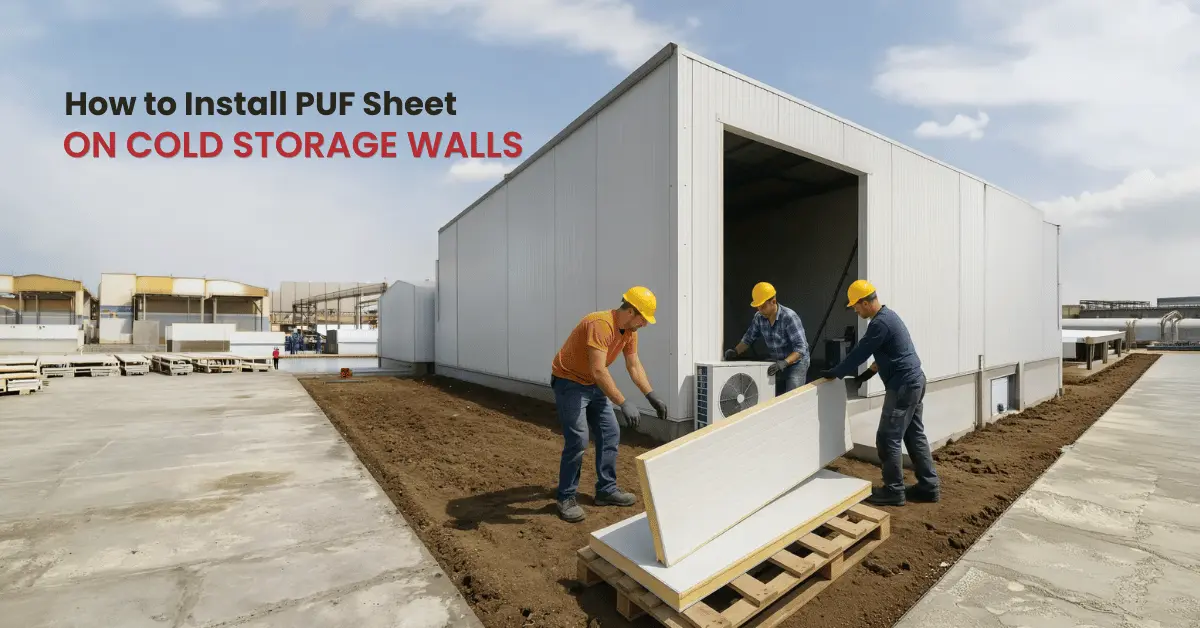
Proper PUF sheet installation is crucial for maintaining the efficiency, durability, and temperature stability of a cold storage facility. Cold rooms are designed to preserve perishable goods such as food, pharmaceuticals, dairy products, and chemicals, which require a controlled environment at all times.
Even a small mistake during installation can lead to temperature leakage, moisture build-up, higher energy consumption, and reduced lifespan of the cold storage structure.
When installed correctly, PUF panels provide excellent thermal insulation, airtight sealing, and strong structural support. It ensures that the cold storage operates efficiently while keeping electricity costs under control.
In this guide, we will explain how to install a PUF sheet on a cold storage wall step by step, along with safety tips, common mistakes to avoid, and maintenance guidelines for long-term performance.
Why Use a PUF Panel for Cold Room Insulation?
PUF panels are widely used in cold storage construction due to their superior insulation and strong structural performance. They are designed to maintain low temperatures without allowing heat transfer from the outside environment.
One of the biggest advantages of using a PUF panel for cold room insulation is its high thermal resistance. The polyurethane foam core in the panel prevents heat transfer, helping maintain a stable internal temperature. It reduces the load on refrigeration systems, resulting in significant energy savings over time.
Another reason why PUF sheet installation is preferred for cold storage is the lightweight yet strong structure of the panels. These panels are easy to handle during installation, but once fixed properly, they provide excellent rigidity and durability. They are suitable for both small cold rooms and large industrial cold storage facilities.
PUF panels are also highly suitable for low-temperature environments because they resist moisture, corrosion, and fungal growth. In cold rooms, condensation is common, but properly installed PUF sheets prevent water penetration and maintain airtight insulation.
In addition, PUF panels provide a clean and smooth finish, which is important for hygiene-sensitive industries such as food processing and pharmaceuticals. Because of these benefits, PUF sheet installation has become the standard method for building modern cold storage walls.
Step-by-Step PUF Sheet Installation for Cold Storage
Installing PUF sheets in a cold storage wall requires proper planning and careful execution. The installation process includes preparation, positioning, fixing, sealing, and finishing. Each step must be done correctly to ensure that the insulation remains effective and the structure stays airtight.
Below is the complete PUF sheet installation process explained in simple steps.
Site Preparation
Before starting the installation, the site must be properly prepared. This step ensures that the panels fit correctly and the structure remains strong and leak-proof.
The wall surface or structural frame should be cleaned thoroughly to remove dust, oil, or debris. Any uneven surface must be levelled so that the panels can sit properly without gaps. If the base surface is not flat, the panels may not align correctly, leading to insulation failure.
It is also important to inspect the wall alignment before installing the panels. The structure should be straight, and measurements must be checked carefully. Even a small misalignment can create gaps between panels, allowing cold air to escape.
Moisture is another factor to check during site preparation. The base surface must be dry, as moisture trapped in the panel joints can cause condensation and corrosion later. Proper inspection at this stage makes the PUF sheet installation process smoother and more reliable.
Panel Positioning and Handling
PUF panels must be handled carefully to avoid damage to the insulation core and joint edges. These panels are strong but can get damaged if dropped or dragged on rough surfaces.
When moving the panels, it is recommended to carry them vertically rather than sliding them across the ground. It prevents scratches and protects the tongue-and-groove joints used for sealing.
During positioning, the panels should be correctly aligned in both the vertical and horizontal directions. Proper alignment ensures that the joints fit tightly and the insulation remains continuous. If the panels are not installed correctly, gaps may form, reducing cold storage efficiency.
Another important point during PUF sheet installation is to follow the installation layout plan. Panels should be placed in the correct sequence to maintain structural balance and proper sealing.
Fixing Panels to the Structure
Once the panels are positioned correctly, they must be fixed securely to the structure using suitable fasteners, brackets, or self-drilling screws. The choice of fasteners depends on the structure type, such as a steel frame, a concrete wall, or a prefabricated support.
While fixing the panels, it is important to maintain tight joints between each panel. Sealants or gaskets should be used to make the joints airtight. Proper sealing prevents warm air from entering the cold storage and stops condensation from forming inside the walls.
Panels should also overlap correctly wherever required to maintain insulation continuity. If there is any gap between the panels, the cold room's thermal performance may be significantly reduced.
Correct fixing is one of the most critical steps in PUF sheet installation, because loose panels can lead to vibration, leakage, and structural weakness.
Corner and Ceiling Installation
Corners and ceiling joints require special attention during cold storage installation. These areas are more prone to air leakage and condensation if not sealed properly.
At the corners, panels must be cut with precision to fit tightly without gaps. Special corner profiles or sealing strips can be used to improve insulation and provide additional strength.
During ceiling installation, the panels should be supported properly to prevent sagging. Ceiling panels are usually fixed with suspension systems or brackets that safely support the weight.
All joints at corners and ceiling connections must be sealed using approved sealants or foam. Airtight sealing is necessary to maintain the required temperature inside the cold room.
Careful work in these areas ensures that the PUF sheet installation remains durable and the cold storage stays fully insulated.
PUF Sheet Installation Safety Tips
Safety is very important during installation because PUF panels are large, and installation work often involves height and power tools.
Workers should always wear protective gear, including gloves, helmets, safety shoes, and goggles. It prevents injuries while handling panels or using tools.
Panels must be lifted carefully to avoid bending or breaking. Sharp tools should not be used near the insulation surface because they can damage the panel coating and expose the foam core.
Electrical safety should also be maintained during installation. Since cold storage construction may involve lighting, wiring, and refrigeration systems, all electrical connections must be handled carefully.
Following these precautions ensures a safe, smooth PUF sheet installation process.
Sandwich Panels for Cold Storage – A Versatile Solution
Sandwich panels are among the best materials for building cold storage rooms. These panels consist of two metal sheets with an insulated core between them, which provides both strength and thermal protection.
One of the main reasons sandwich panels are used in cold rooms is their ability to maintain stable temperatures even in extreme weather conditions. They reduce heat transfer and help refrigeration systems work efficiently.
Another advantage is that sandwich panels provide a clean, professional finish, which is important in industries where hygiene is required. They are also easy to install, which reduces construction time.
One of the main reasons industries prefer sandwich panels is the benefits of using cold panels for cold storage, particularly for temperature control and energy efficiency. These panels minimise heat transfer from outside, helping the refrigeration system maintain a stable internal temperature with less power consumption.
This results in lower operating costs and better performance over time.
Because of these features, sandwich panels are an ideal choice for reliable PUF sheet installation in cold storage projects.
Common Mistakes to Avoid in Cold Storage PUF Sheet Installation
Mistakes during installation can reduce the performance of the cold storage and increase operating costs. One common error is poor panel-to-panel sealing. Even small gaps can allow warm air to enter, which leads to temperature loss and higher electricity consumption.
Another mistake is misaligned panels. If the panels are not placed straight, the joints will not fit properly, and insulation continuity will be affected.
Using the wrong fasteners is also a problem. Fasteners that are not suitable for the structure may become loose over time, causing the panels to shift.
Sometimes installers ignore moisture control, which leads to condensation inside the wall. It can damage the panel coating and reduce the life of the cold storage.
Avoiding these mistakes ensures that the PUF sheet installation remains strong, airtight, and long-lasting.
Maintenance Tips Post Installation
After installation, regular maintenance is necessary to keep the cold storage working efficiently. Periodic inspections should be conducted to verify that the panel joints remain properly sealed.
Panels should be cleaned regularly to remove dust, oil, or chemical deposits. Clean surfaces help maintain hygiene and prevent corrosion.
It is also important to check for any damage to the panel coating, screws, or sealants. If any joint becomes loose, it should be repaired immediately to prevent temperature leakage.
Checking for moisture or rust around fasteners is another useful maintenance step. Early repair can extend the life of the panels and maintain strong insulation performance.
Proper maintenance after PUF sheet installation ensures that the cold storage remains energy-efficient and durable for many years.
Conclusion
Correct PUF sheet installation is essential for building an efficient and long-lasting cold storage wall. From site preparation to panel fixing and sealing, every step must be carried out carefully to ensure proper insulation and an airtight construction.
PUF panels provide excellent thermal resistance, strong structure, and moisture protection, making them ideal for low-temperature environments. However, their performance depends greatly on how well they are installed.
By following the proper installation method, using appropriate fasteners, sealing all joints, and avoiding common mistakes, you can ensure the cold storage operates efficiently with minimal energy loss.
Regular inspection and maintenance after installation will further increase the lifespan of the panels and keep the cold room functioning at its best. With proper planning and careful execution, PUF sheet installation can provide a reliable, cost-effective solution for modern cold storage construction.